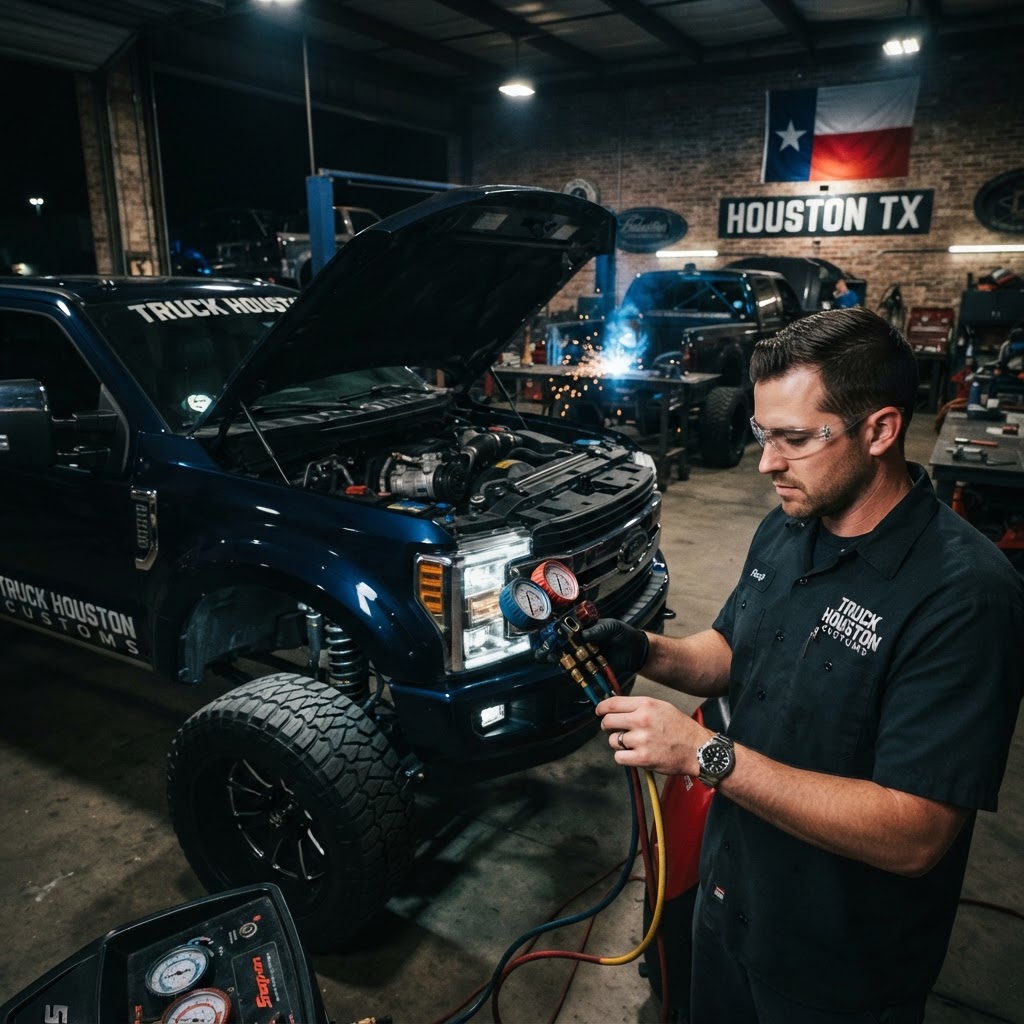
Beat the Houston Heat: Why Your AC Needs More Than Just a Top-Off
Stuck in gridlock on the Katy Freeway with nothing but hot air blowing from your vents? Don't let a failing AC system turn your daily commute into a sauna—here is the gearhead’s guide to keeping your rig ice-cold.
The Houston Heat is No Joke
We all know the drill. You’re sitting in traffic on the 610 loop, the sun is beating down through the windshield, and you crank the dial to max cool. But instead of that crisp, arctic blast you’re craving, you get a lukewarm breeze that smells like a gym locker. In Houston, a broken AC isn't just an inconvenience; it’s a survival issue. Whether you’re daily-driving a lifted Silverado or a precision-tuned European import, your climate control system is a complex piece of engineering that demands respect.
Why 'Just Adding Freon' is a Rookie Mistake
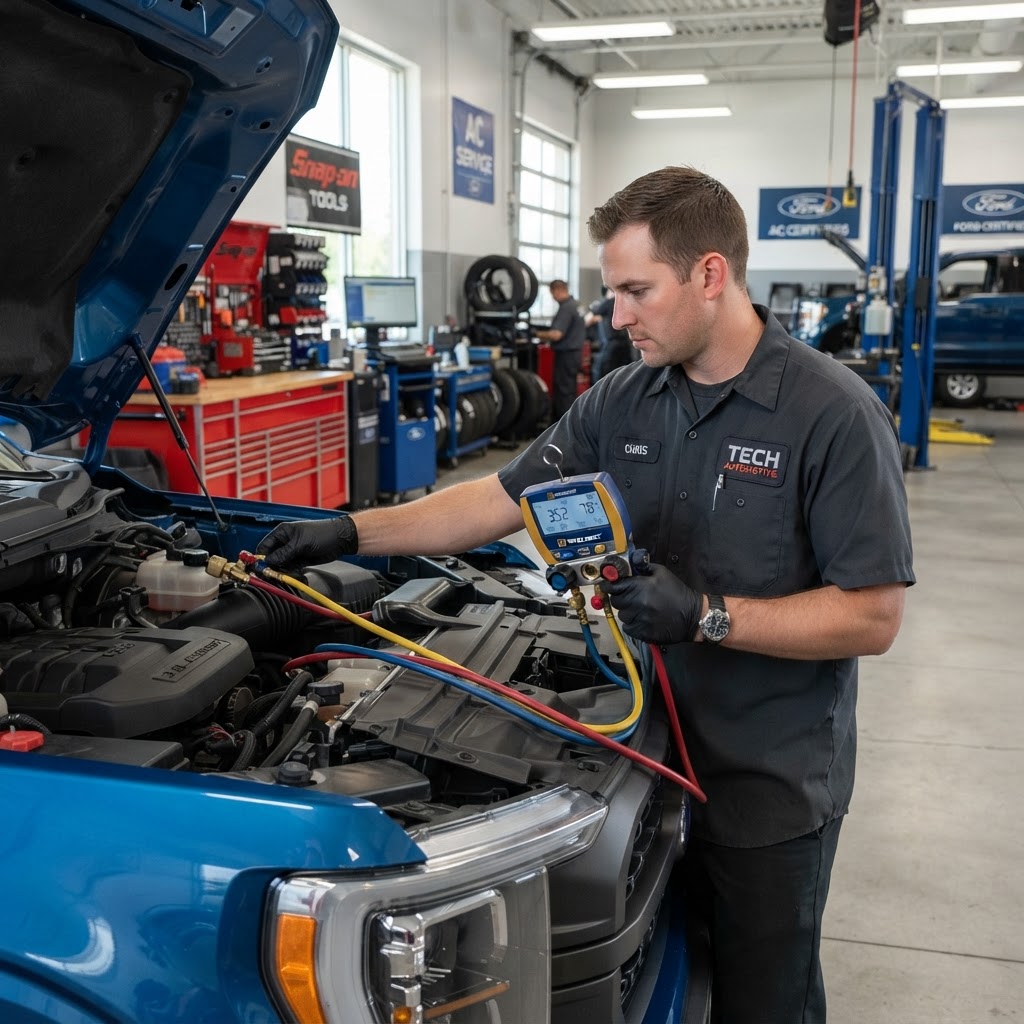
I hear it all the time at the shop: 'Just top it off, man.' If only it were that simple. If your system is low on refrigerant, it means there is a leak somewhere in the loop. Refrigerant is a closed-circuit substance; it doesn't just evaporate into thin air unless there’s a breach in the lines, a failing seal, or a compromised condenser.
"We never use stop-leak additives. These products contaminate the refrigerant circuit and can block the expansion valve, turning a $150 repair into a $700 system flush."
When you ignore the leak and just keep pumping refrigerant in, you’re putting a band-aid on a bullet hole. You’re also risking damage to your compressor, which is the heart of your AC system. A proper auto air conditioning service in Houston should always start with a comprehensive leak check—using UV dye or electronic detection—to find the culprit before a single ounce of gas is added.
The Anatomy of a Proper Recharge
When you bring your rig into a shop that knows what they’re doing, the process is surgical. It’s not about guessing; it’s about precision. First, we evacuate the old refrigerant to ensure the system is clean. Then, we perform a pressure decay test to verify the integrity of the lines.
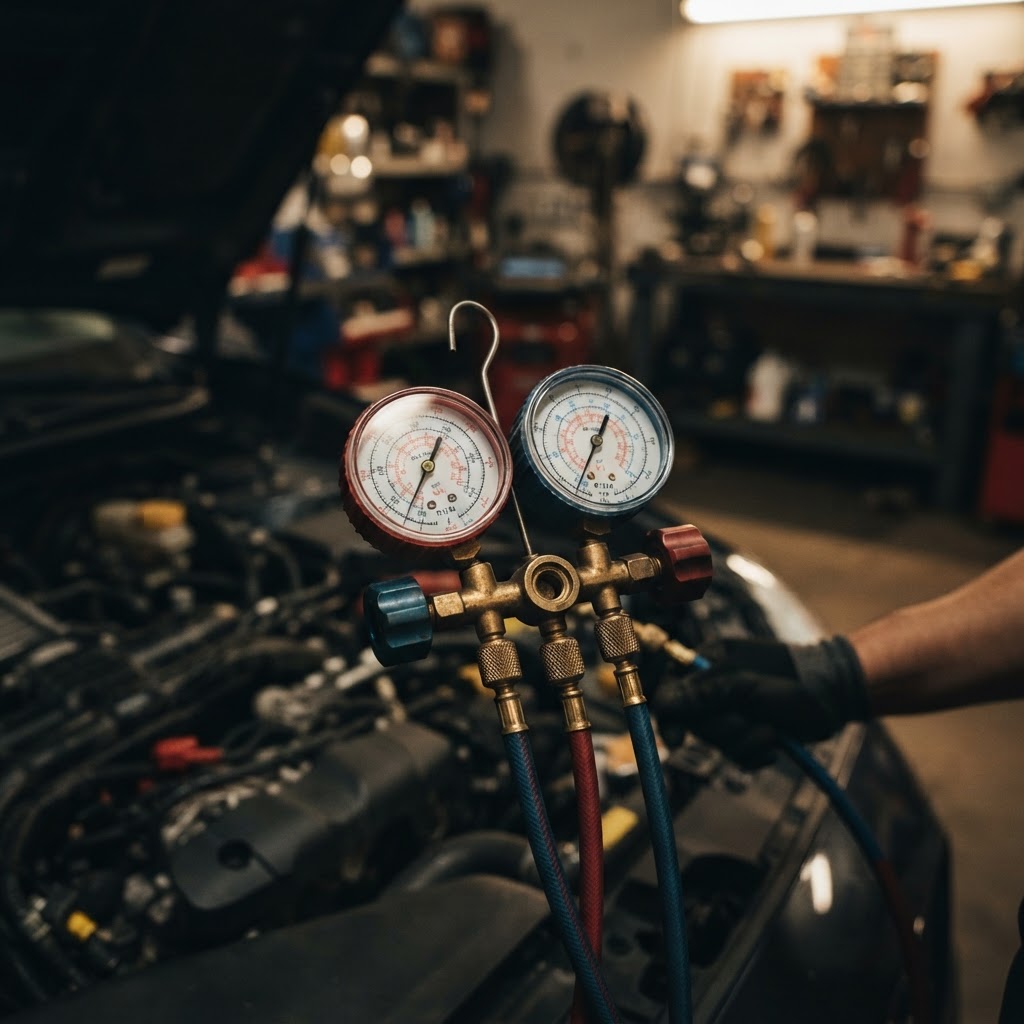
We’re looking for that sweet spot—38 to 45°F at the vents within five minutes. If your car isn't hitting those numbers, you’re not just uncomfortable; you’re wasting fuel and putting unnecessary strain on your engine. Modern systems, especially those using R-1234yf, require specific equipment and expertise. Don't trust your high-performance machine to a generic quick-lube joint that doesn't understand the nuances of your specific cooling architecture.
Signs Your System is Tapping Out
Your truck talks to you, if you listen. If you hear a whining or hissing noise from the engine bay when you hit the AC button, that’s a red flag. If your windows won't defog during those humid Gulf Coast rainstorms, or if the engine bogs down significantly when the compressor kicks in, it’s time for a professional diagnosis.
Ignoring these symptoms leads to catastrophic failure. A seized compressor can take out your serpentine belt, leaving you stranded on the side of the road when you should be heading to the trails or the office. Regular car AC repair isn't just about comfort; it’s about reliability. It’s about ensuring that when you turn the key, your truck is ready to handle whatever the Texas climate throws at it.
Stay Frosty
At the end of the day, your vehicle is an extension of your personality. You’ve put the work into the lift, the wheels, and the performance mods—don't let a busted AC system ruin the experience. Whether you’re navigating the urban jungle or heading out for a weekend adventure, you deserve to be cool, collected, and comfortable.
Ready to build your rig? Book a consultation with Spectrum Outfitters.